



Thanks to our strategic location and our dynamic area of influence, the Port of Valencia is a key player in Spain’s foreign trade
There is so much more to Valenciaport than just port infrastructure. It serves as one of the key economic, logistical and social drivers of the Region of Valencia, as well as strategic platform for connecting businesses, industries and regions with major international markets.
Comprising the ports of Valencia, Sagunto and Gandia, Valenciaport has established itself as Europe’s leading Mediterranean port for container traffic and as a leader in connectivity, innovation and sustainability.
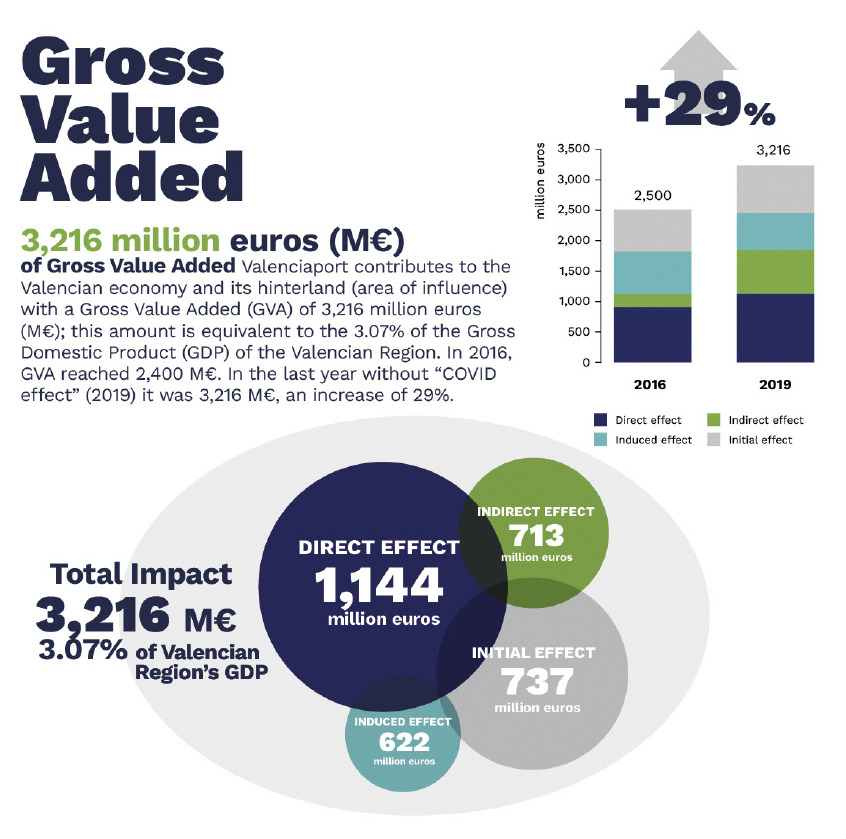
A key port for the Spanish economy Valenciaport’s activities have a significant economic impact on the Region of Valencia and the country as a whole. Every year, it contributes more than €3.2 billion in Gross Value Added (GVA), representing more than 3% of the GVA of the Region of Valencia. What’s more, the knock-on effect boosts economic activity: for every euro generated at the port, a further three euros are generated in the Valencian economy; and for every new job created at the port, a further five jobs are created in its hinterland.
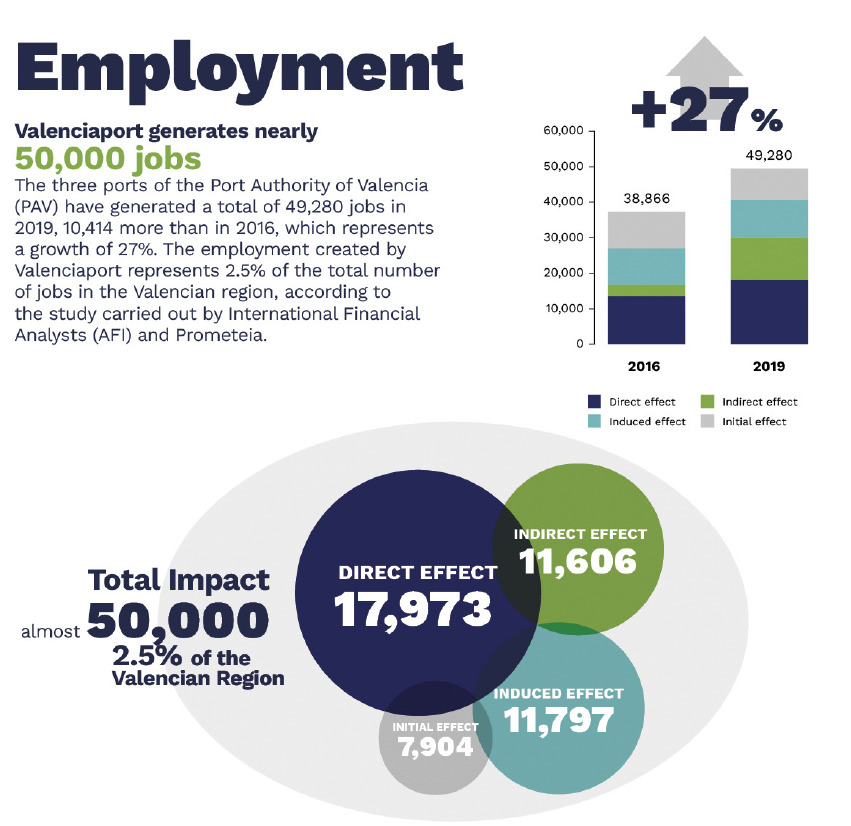
That’s why the port ecosystem is a major source of employment. As it stands today, over 50,000 people work directly or indirectly in the Valenciaport environment, accounting for around 2.5% of total employment in the Region of Valencia.
More than 55% of the country’s GDP is concentrated within a 350-kilometre radius of the port terminals, making this infrastructure a key factor in driving innovation, business competitiveness and Spanish foreign trade.
A leading Mediterranean city and a gateway to global trade Valenciaport currently ranks fourth among European ports for container traffic.
Its international connectivity links the Iberian Peninsula with all five continents thanks to more than 100 regular shipping routes. This facilitates the movement of goods to key markets in Europe, Asia, Africa and the Americas.
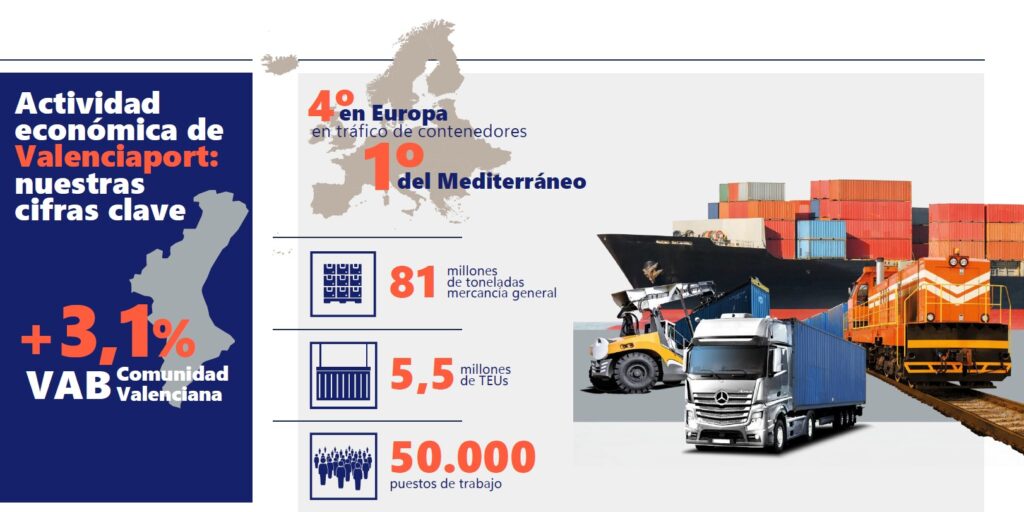
Valenciaport handles more than 80 million tonnes of goods, and 5.6 million containers (TEU) pass through its terminals each year.
Some headline traffic figures are:
- 13.76 million tonnes of ro-ro traffic
- 524,428 vehicles handled
- 3.39 million tonnes transported by rail
- Over 1.66 million passengers, including those on scheduled services and cruise ships
Valenciaport facilities handle 40% of Spain’s total imports and exports.
One in five cars that Spain imports or exports passes through the ports of Sagunto or Valencia.
The areas with the strongest commercial links to Valenciaport are:
- Mediterranean and Black Sea 22.7 Mt
- Far East 12.8 Mt
- Africa West Coast 5.7 Mt
- USA – Atlantic 3.3 Mt
A port committed to people and the local area
Valenciaport’s impact extends beyond logistics and economic activity. The port is involved in a wide range of social, cultural and educational activities designed to make port operations more accessible to the public. Every year, exhibitions, guided tours and educational activities are organised in Valencia, Sagunto and Gandia. Around 30,000 people visit the exhibitions organised by the Port Authority of Valencia every year, and more than 11,000 students take part in educational activities related to the port environment.
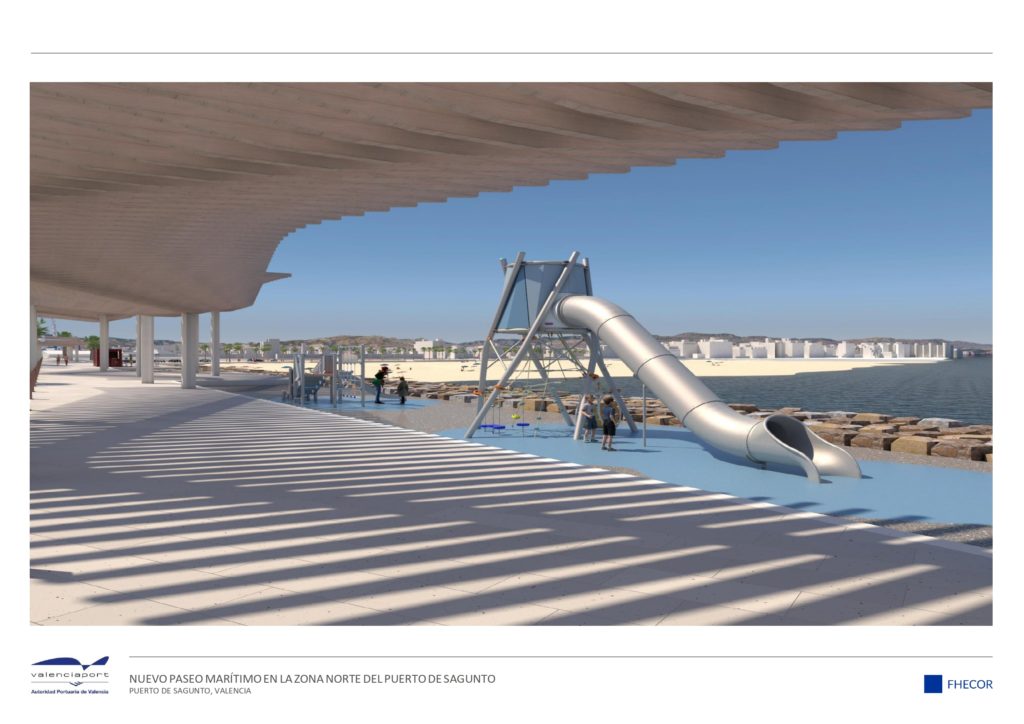
Valenciaport has also spearheaded the restoration and recovery of iconic spaces like the Clock Tower, the Sagunto Jetty and the Gandia Fruit Warehouses.

The spirit of solidarity is also part of the port’s DNA. Through the Aportem – Puerto Solidario association, over than 25 companies in the sector are working together on social initiatives and projects to support vulnerable groups. Over the last 10 years, these activities have managed to raise:
- + 5,500 items of sports equipment
- + 18,800 items of clothing
- + 20 tonnes of food
- + 62,500 items of school supplies
A leader in sustainability and environmental innovation
Valenciaport is working towards a clear goal: to achieve net-zero emissions by 2035.
To achieve this, the port is promoting various energy transition and decarbonisation initiatives. Today, more than 18% of the energy consumed within the port area is generated on-site via solar installations.
Some of the most important initiatives include:
- The solar power plant at the Port of Gandia, which makes the port the first in Europe to be energy self-sufficient
- The solar plant at the Port of Valencia’s Príncipe Felipe quay produces 3% of the energy consumed by the port.
- The solar plant at Valencia’s Terminal Europa vehicle silo produces 15% of the energy the site needs to operate.
- Electrification of terminals for the supply of electricity to ships. The target is to have 80% of these up and running by 2028.
- Rail freight corridor with the capacity to handle more than 10,000 lorries per year. This represents an estimated saving of around 16,000 tonnes of CO₂ per year.
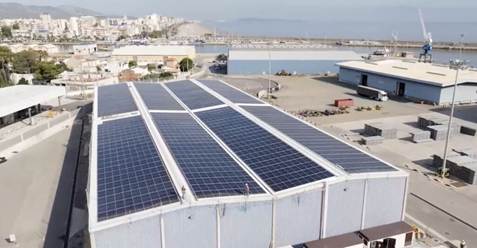
Thanks to this strategy, Valenciaport has established itself as one of Europe’s most advanced ports in terms of environmental innovation and sustainability in maritime transport and logistics.
Valenciaport: a strategic infrastructure for the future
With three ports, a robust logistics network, thousands of professionals and global connections, Valenciaport continues to consolidate its position as a vital infrastructure for economic growth, business competitiveness and the sustainable transformation of maritime transport. The ability to generate wealth, jobs, innovation and opportunities makes Valenciaport a crucial stakeholder in the present and future of the Region of Valencia and Spain. Valenciaport has always been committed to innovation as a means of ensuring the port’s competitiveness, which has proven key to its success in recent years. In today’s complex world, there is a renewed focus on innovation to consolidate the Port Authority’s technological leadership and position the port as a major technological laboratory that continues to pave the way towards excellence.