



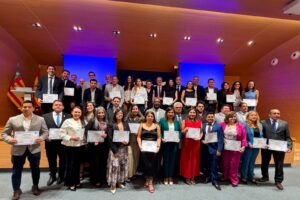
- The training, organized as part of UNCTAD’s TrainForTrade Port Management Program, took place in Valencia from June 29 to July 10
- Professionals from Argentina, Colombia, Guatemala, Mexico, Peru, Panama, and the Dominican Republic have participated in the course
- International trade and transportation, the organization and operation of port systems, and the challenges of sustainable ports were among the issues addressed
València, July 14, 2026 – The Port Authority of Valencia (APV) hosted the Course on Modern Port Management, an initiative developed as part of the TrainForTrade Port Management Program of the United Nations Conference on Trade and Development (UNCTAD).
The training took place from June 29 to July 10 at the Valenciaport facilities and brought together 33 port professionals from Argentina, Colombia, Guatemala, Mexico, Peru, Panama, and the Dominican Republic. The closing ceremony was attended by the Secretary General of Puertos del Estado, Clara de la Calle; the President of the APV, Mar Chao; and representatives from the port authorities of Cartagena, Gijón, and Las Palmas.
The course was aimed at managers, department heads, and senior executives from the port communities of Spanish-speaking countries, representing both the public and private sectors. All participants have extensive professional experience in commercial, technical, administrative, economic, customs, or port management activities.
The initiative had the objective of updating knowledge, as well as establishing the basis for the subsequent dissemination of the course contents within the port communities of the participating countries, strengthening networking, and facilitating the incorporation of new members into the TrainForTrade Port Management Programme.
Broad representation of the port sector
Among the public institutions represented are port agencies and authorities such as Argentina’s Secretariat of Fisheries; the management consortia of Puerto Quequén and the Port of Bahía Blanca; Argentina’s National Agency for Ports and Navigation; Puerto Comodoro Rivadavia; the Santo Tomás de Castilla National Port Authority of Guatemala; the National Port Commission of Guatemala; the Guatemalan Superintendency of Tax Administration; the Quetzal Port Authority; the Mexican Secretariat of the Navy; the Lázaro Cárdenas National Port System Administration; the Panama Maritime Authority; and the National Port Authority of Peru.
Representatives from the Organization of American States and various organizations involved in foreign trade and maritime and port activities also participated.
On the private sector side, the training program included professionals from Puerto Jennefer, the American Association of Port Authorities for Latin America and the Caribbean, Livingston International, the Guatemalan Shipowners’ Association, Trabajos Marítimos S.A., GMS Consulting, SACO Shipping, Agencias Navieras Rannik, and various nongovernmental organizations related to the port sector.
This combination of public and private sectors aligns with the collaboration model promoted by UNCTAD’s Port Management Program, which is based on the creation of international networks, the exchange of experiences, and the joint search for value-added solutions for port communities.
An international network of port expertise
The UNCTAD Port Management Programme is structured through the Spanish-speaking Network, which was established in Valencia in 2008 and in which the Port Authority of Valencia is a key partner through the signing of the corresponding Memoranda of Understanding. The most recent of these agreements was signed in 2024 by Valenciaport, Puertos del Estado and UNCTAD, and remains in force until the end of 2027.
Among the other Spanish port authorities participating in the project is Gijón, which, like Valencia, has been involved since the project’s inception; Las Palmas and Cartagena have recently joined as well.
The methodology of this program, which is the result of a public-private partnership, promotes the exchange of knowledge and experiences, the use of information and communication technologies, and the development of innovative solutions that help improve the competitiveness, sustainability, and adaptability of port communities. By hosting this course, the Port Authority of Valencia is reinforcing its commitment to international cooperation and to training the professionals responsible for managing and transforming Latin American ports.